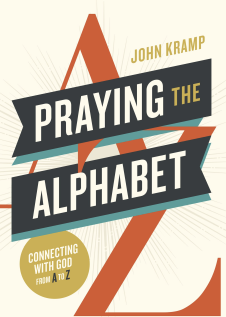
Some books arrive with a quiet simplicity that belies their depth, offering not a complicated system or a new spiritual trend, but a gentle return to what is essential. Praying the Alphabet by John Kramp is one of those rare works. It is small in concept, humble in tone, and yet profoundly refreshing in its invitation: rediscover prayer by walking through the alphabet, one letter at a time. In a world where prayer often feels rushed, repetitive, or weighed down by distraction, Kramp offers a pathway that is both accessible and deeply renewing.
The premise is inspired by the structure of Psalm 119, the longest chapter in Scripture, which is arranged as an acrostic—twenty‑two stanzas, each beginning with a successive letter of the Hebrew alphabet. Kramp takes this ancient poetic form and translates it into a modern spiritual practice. The result is a book that feels both timeless and timely, rooted in Scripture yet crafted for the weary, the overwhelmed, the spiritually dry, and the believer who longs for a more honest, heartfelt conversation with God.
Kramp begins by naming a reality many Christians quietly carry: prayer can be hard. Not because we don’t believe in it, but because we often don’t know what to say. Our minds wander. Our words repeat. Our hearts feel dull. We reach for familiar phrases, but they no longer carry the weight they once did. Kramp’s approach doesn’t shame this struggle; it dignifies it. He understands that prayer is not a performance but a relationship, and relationships sometimes need new language to stay alive.
The heart of the book is its simple but transformative method: use each letter of the alphabet as a prompt for prayer. For every letter, Kramp provides a thoughtful list of words—some expected, some surprising—and two sample prayers that model how those words can shape a conversation with God. The effect is not formulaic but freeing. Instead of grasping for something to say, the reader is gently guided into new vocabulary, new angles of reflection, and new ways of expressing gratitude, confession, longing, and praise.
What makes this book especially compelling is Kramp’s pastoral sensitivity. He writes not as a theorist but as someone who has lived the struggle of prayer and found a way through it. His background in ministry, leadership, and spiritual formation is evident, but never heavy‑handed. He is a guide, not a lecturer. His tone is warm, encouraging, and deeply human.
Readers familiar with Kramp’s earlier work—particularly Out of Their Faces and Into Their Shoes, the book that introduced his concept of “lostology”—will recognize his gift for taking everyday experiences and turning them into spiritual insight. In that earlier work, he explored what it means to understand the experience of being lost so that Christians can better empathize with those who are spiritually searching. Here, he applies a similar instinct: he takes something as ordinary as the alphabet and reveals how it can become a doorway into deeper communion with God.
Kramp’s own story adds richness to the book. His decades of ministry, leadership at LifeWay, and experience as a church planter have shaped him into someone who understands both the challenges and the joys of spiritual growth. His academic background—from Baylor to Southwestern Seminary to Northwestern’s Kellogg School of Management—gives him a rare blend of theological grounding and practical wisdom. And his well‑known humor about being “lost thousands of hours” in his life adds a touch of humility that makes his writing approachable.
The structure of the book is one of its greatest strengths. Each chapter focuses on a single letter, offering:
- A curated list of words to spark prayer
- Two sample prayers—one simple, one more expansive
- Encouragement for how to use the letter throughout the day
This format makes the book ideal for daily use, small‑group settings, or personal retreats. It also makes it accessible for believers at any stage—new Christians who feel intimidated by prayer, seasoned believers who need renewal, and ministry leaders who want a tool to help others grow.
Thematically, Praying the Alphabet is about more than vocabulary. It is about slowing down. It is about paying attention. It is about letting God shape our hearts through the words we choose and the words we release. Kramp’s method encourages honesty—naming fears, confessing sin, expressing gratitude, and acknowledging needs we might otherwise overlook. It also encourages worship, reminding us that prayer is not merely asking but adoring.
From a craft perspective, the writing is clear, uncluttered, and intentionally gentle. Kramp avoids theological jargon and instead uses language that feels like a conversation with a wise friend. The pacing is steady, the chapters are manageable, and the overall tone is one of invitation rather than instruction.
If the book has a limitation, it is simply that its simplicity may cause some readers to underestimate its depth. But those who engage the practice will quickly discover that the alphabet is not a gimmick—it is a framework that opens the heart. Like a trellis supporting a growing vine, the structure holds space for spiritual life to flourish.
Who is this book for? Anyone who has ever felt stuck in prayer. Anyone who longs for a deeper connection with God. Anyone who wants to move beyond routine and into relationship. It is especially helpful for those walking through seasons of grief, anxiety, or spiritual dryness, when words feel scarce and the heart feels heavy.
In the end, Praying the Alphabet is a book that does exactly what it promises: it helps readers connect with God from A to Z. It is simple enough to begin immediately, rich enough to return to again and again, and wise enough to shape a lifetime of prayer. John Kramp has given the church a gift—a gentle, practical, deeply spiritual tool for rediscovering the joy of talking with God.