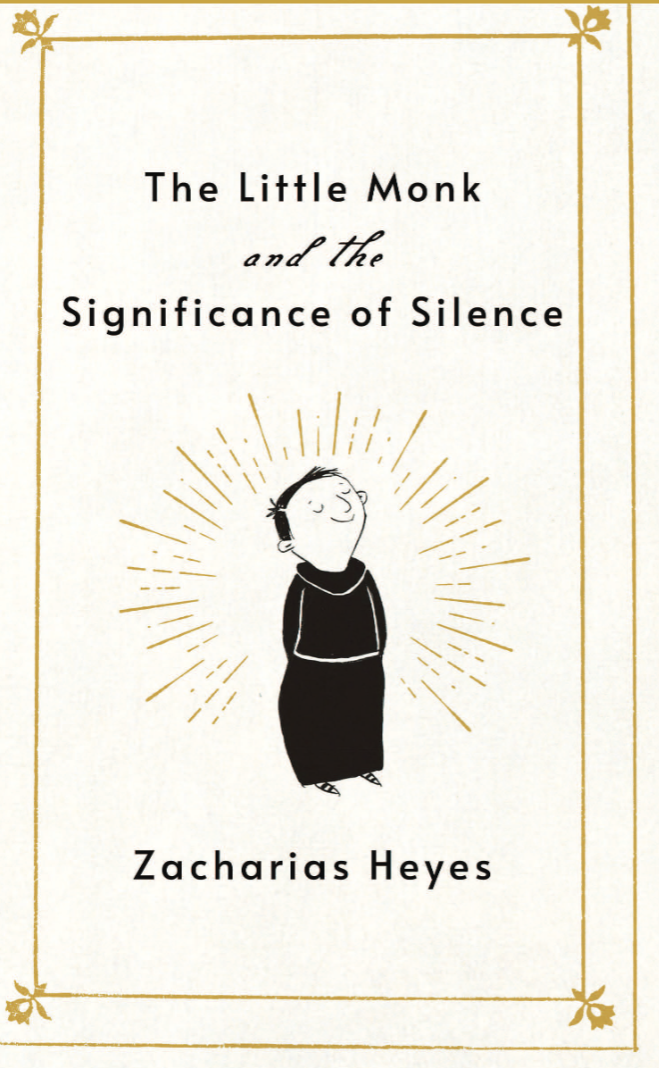
Book Report: The Little Monk and the Significance of Silence by Zacharias Heyes
Overview
Zacharias Heyes, a Benedictine monk, offers a gentle, humorous, and deeply reflective exploration of silence as a spiritual practice. Blending his own monastic experience with the charming tale of “the little monk” by Matthias E. Gahr, Heyes creates a book that is both accessible and quietly profound. Accompanied by simple illustrations and grounded in the Rule of St. Benedict, the book invites readers to rediscover the peace of quietude in a world saturated with noise.
The Search: Silence and Reticence in the Benedictine Tradition
The book opens with an exploration of the Benedictine understanding of silence. Heyes emphasizes that silence is not emptiness or withdrawal but a deliberate discipline of reticence, a way of cultivating inner spaciousness. Drawing on the Rule of St. Benedict, he highlights the value of measured speech, deep listening, and the creation of an interior environment where one can encounter God and oneself more honestly.
The little monk’s story mirrors this search. He begins with a simple question: What is the value of silence when it seems like nothing at all? His early attempts to practice quietude reveal how difficult it is to still the mind when the world—and one’s own thoughts—are constantly clamoring for attention.
A Decision Freely Made
Heyes stresses that silence must be chosen freely. It cannot be imposed from outside; it must arise from an inner desire for depth and clarity. This section reflects on the freedom involved in stepping away from noise and choosing a path that leads inward.
The little monk embodies this choice. He decides to enter silence not out of obligation but out of curiosity and longing. This decision marks the beginning of his transformation, even though he does not yet know where it will lead.
Turmoil
Silence, as Heyes notes, does not immediately bring peace. Instead, it often stirs up turmoil—unsettled emotions, anxieties, and the mental clutter we usually drown out with activity. This stage is portrayed with honesty and a touch of humor.
The little monk experiences this turbulence vividly. His thoughts race, doubts surface, and he wonders whether silence is worth the effort. Heyes uses this moment to show that silence is not an escape from life but a confrontation with its deeper layers.
The Silent Presence
Gradually, as the inner noise settles, something new emerges: a silent presence. Heyes describes this not as dramatic revelation but as a subtle, steady sense of being accompanied. Silence becomes a place of encounter rather than emptiness.
For the little monk, this presence is transformative. He discovers that silence is not “nothingness” after all—it is a space where stillness, clarity, and spiritual companionship can be felt. The illustrations and reflective tone reinforce the gentle unfolding of this realization.
Keeping Calm: Practical Guidance
The book concludes with practical advice for integrating silence into daily life. Heyes offers thoughtful questions, simple exercises, and short reflections that help readers slow down, listen deeply, and cultivate stillness. These tools make the book not only contemplative but also usable.
The little monk’s journey becomes a model for readers: silence is not a rare or monastic luxury but a practice that can be woven into ordinary life, even in small moments.
Conclusion
The Little Monk and the Significance of Silence is a touching and quietly humorous invitation to rediscover the value of silence. Through the interplay of Benedictine wisdom, personal experience, and the charming narrative of the little monk, Heyes shows that silence is not an absence but a presence—one that can reshape how we live, listen, and encounter the world. The book encourages readers to slow down, breathe, and find the stillness that has always been waiting within.