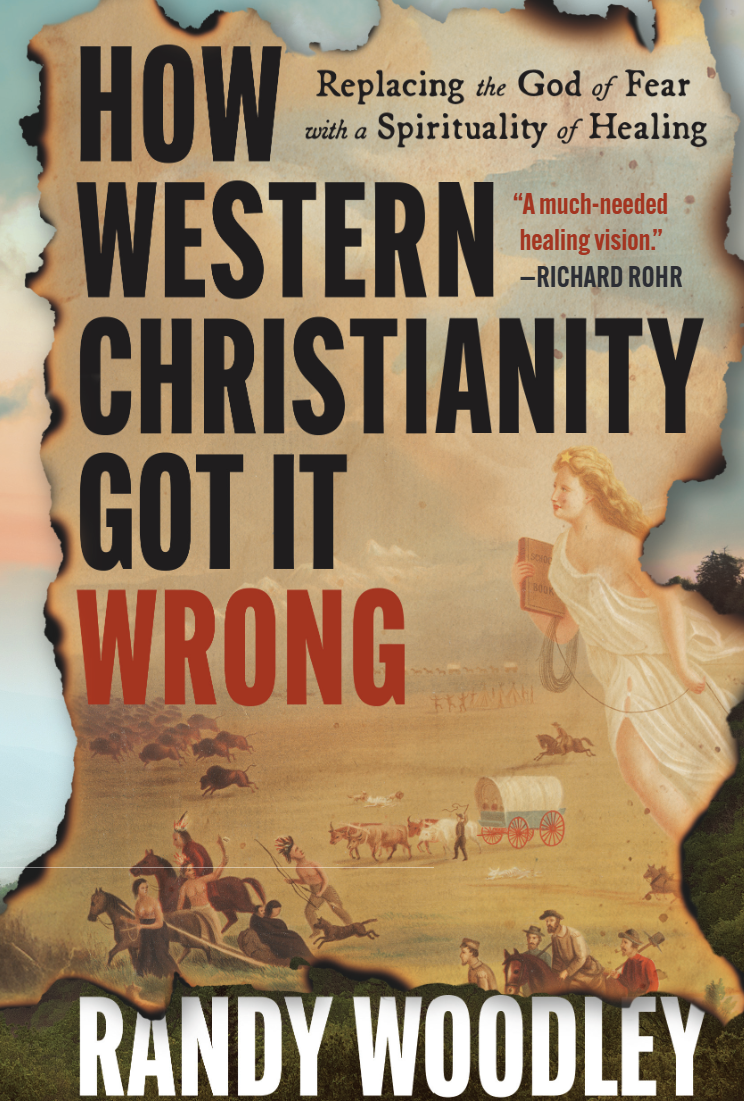
A Book Review
Hook
Randy Woodley delivers a bold, unflinching examination of Western Christianity’s legacy, offering a vision of faith rooted not in fear or domination but in healing, relationship, and harmony with creation.
Context & Author Background
Woodley, a respected Indigenous scholar, activist, and theologian of Cherokee descent, has long critiqued the ways Christian theology has been shaped by empire rather than by Jesus. His mixed heritage and decades of work in intercultural ministry give him a unique vantage point: he writes as both insider and outsider, both critic and healer. This book sits within his broader project of recovering Indigenous wisdom and exposing the colonial distortions embedded in Western Christian thought.
Synopsis
Across twelve tightly argued chapters, Woodley traces how a brown, Indigenous Middle Eastern teacher became the figurehead for systems of conquest, extraction, and environmental harm. He identifies the theological ideas that enabled colonisation, critiques violent atonement theories, and exposes how Western Christianity claimed a monopoly on sin and salvation. Drawing on Indigenous traditions that predate Christian arrival on Turtle Island, he offers an alternative vision: a Jesus Way grounded in kinship, reciprocity, and wholeness.
Analysis
Craft: Woodley writes with clarity and conviction. His prose is accessible yet intellectually rigorous, weaving history, theology, and Indigenous cosmology into a coherent narrative. Themes:
- The distortion of Jesus’ message through empire
- The harm caused by fear‑based theology
- The healing potential of Indigenous wisdom
- The call to reimagine Christian community as relational rather than hierarchical Argumentation: His critique is sharp but not cynical. He exposes the wounds of Western Christianity while simultaneously offering a path toward repair. Emotional & Intellectual Impact: Readers will feel both unsettled and hopeful — unsettled by the truth-telling, hopeful because Woodley refuses to leave the reader in despair. His vision of a relational, creation‑honouring spirituality is compelling.
Limitations
Some readers may find the critique uncomfortable or confrontational, especially if they are unfamiliar with the history of Christian colonialism. Others may wish for more practical guidance on how churches can embody the healing vision he describes. But these tensions arise precisely because the book is doing necessary work.
Comparative Titles
Readers who appreciated Brian McLaren’s Do I Stay Christian?, Victoria Loorz’s Church of the Wild, or Richard Rohr’s contemplative critiques will find Woodley’s work both resonant and challenging.
Verdict
A courageous, incisive, and deeply needed contribution to contemporary theology. Woodley exposes the fractures in Western Christianity with honesty and love, then points toward a spirituality capable of healing both people and the land. This is essential reading for pastors, seminarians, and anyone seeking a faith that aligns with justice, creation, and the way of Jesus.