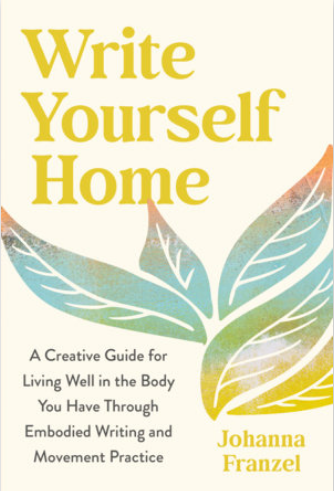
Write Yourself Home: A Creative Guide for Living Well in the Body You Have Through Embodied Writing and Movement Practice by Johanna Franzel
Johanna Franzel’s Write Yourself Home is a gentle, radical, and deeply humane guide for anyone longing to reconnect with their body—not as an enemy to battle or a project to perfect, but as a place of belonging. It blends somatic wisdom, creative practice, and compassionate storytelling into a resource that feels both grounding and liberating.
What the Book Sets Out to Do
Franzel invites readers into an embodied journey shaped by writing, movement, breath, and attentive presence. Her central conviction is clear: your body is not a problem to solve but a home to inhabit. Through accessible practices and reflective prompts, she helps readers cultivate a relationship with their bodies that is rooted in curiosity, compassion, and creativity.
The book is especially attuned to readers living with chronic illness, trauma, or disconnection from their physical selves. Rather than offering quick fixes or idealized wellness narratives, Franzel offers companionship, honesty, and tools that meet readers exactly where they are.
Structure of the Journey
The book unfolds in six movements, each one deepening the reader’s sense of presence and possibility:
- Orientation — establishing safety, grounding, and the permission to begin from “right here.”
- The Check-In — learning to listen to the body’s cues with gentleness rather than judgment.
- The Stories We Carry — exploring how memory, identity, and experience live within the body.
- Naming, Grieving & Celebrating — honouring the full emotional landscape of embodied life.
- Discovery — cultivating creativity, play, and curiosity as pathways to healing.
- Connection, Collective & Song — widening the circle to include community, shared humanity, and the larger story we belong to.
This progression mirrors a therapeutic arc: grounding, noticing, processing, expanding, and integrating.
Key Themes
🌱 Embodied Wisdom
Franzel teaches readers to trust the body’s signals—not as obstacles, but as invitations. Her approach is rooted in somatic therapy, but expressed in language that is warm, accessible, and deeply human.
✍️ Writing as a Pathway Home
Writing becomes a tool for noticing, naming, and integrating. The prompts are not prescriptive; they are spacious, allowing readers to explore at their own pace.
🧘♀️ Movement and Breath
Simple practices help readers reconnect with physical presence. These are not fitness routines but gentle invitations to inhabit the body with kindness.
💛 Compassion Over Perfection
The book explicitly rejects toxic positivity and the pressure to “fix” oneself. Instead, it offers a vision of wholeness that includes limitation, struggle, and joy.
Strengths of the Book
- Lived experience: Franzel writes as someone who has navigated chronic illness and understands the complexity of embodiment.
- Interdisciplinary depth: Her background in craniosacral therapy, massage, Reiki, documentary storytelling, and education enriches the book’s perspective.
- Accessibility: Practices are adaptable for readers with varying abilities, energy levels, and health conditions.
- Creative integration: The blend of somatic work and writing makes the book uniquely holistic.
- Tone: Gentle, invitational, and non-judgmental—ideal for readers who feel overwhelmed by traditional wellness culture.
Why This Book Matters
In a world that often treats bodies as machines to optimize or obstacles to overcome, Write Yourself Home offers a countercultural vision: your body is a place of wisdom, story, and sacred presence. For readers carrying trauma, illness, or shame, this message is profoundly healing.
The book also speaks to the wider cultural hunger for slowness, authenticity, and embodied connection. It encourages readers to reclaim practices that nourish rather than deplete, and to imagine healing not as perfection but as integration.
Who Will Benefit Most
- Readers living with chronic illness or pain
- Those healing from trauma or disconnection
- Writers seeking a more embodied creative practice
- Therapists, spiritual directors, and educators looking for somatic tools
- Anyone longing for a gentler, more compassionate relationship with their body