Book Report: Nature Poems to See By by Julian Peters
Main Idea The book presents a curated selection of classic and modern nature poems, each reimagined through Julian Peters’s comic‑style illustrations. The combination of poetry and visual art encourages readers—especially younger or reluctant readers—to connect with poetry in a fresh, accessible way. The book explores how humans see, feel, and interpret the natural world across seasons, emotions, and cultures.
Summary
Julian Peters adapts poems from a wide range of poets, including Emily Dickinson, Robert Frost, Langston Hughes, William Wordsworth, Joy Harjo, and many others. Each poem is transformed into a short graphic narrative, with Peters shifting his artistic style to match the tone, imagery, and emotional weight of the original text.
The anthology is organized around the cycle of the seasons, which mirrors the cycle of human life. Spring poems often feel hopeful or awakening; summer poems are vibrant; autumn poems reflect change or nostalgia; winter poems lean toward stillness or introspection. This structure helps readers see nature not just as scenery but as a metaphor for human experience.
The book also includes poems in translation, expanding the cultural range and showing how different traditions express their relationship with nature.
Visual Interpretation
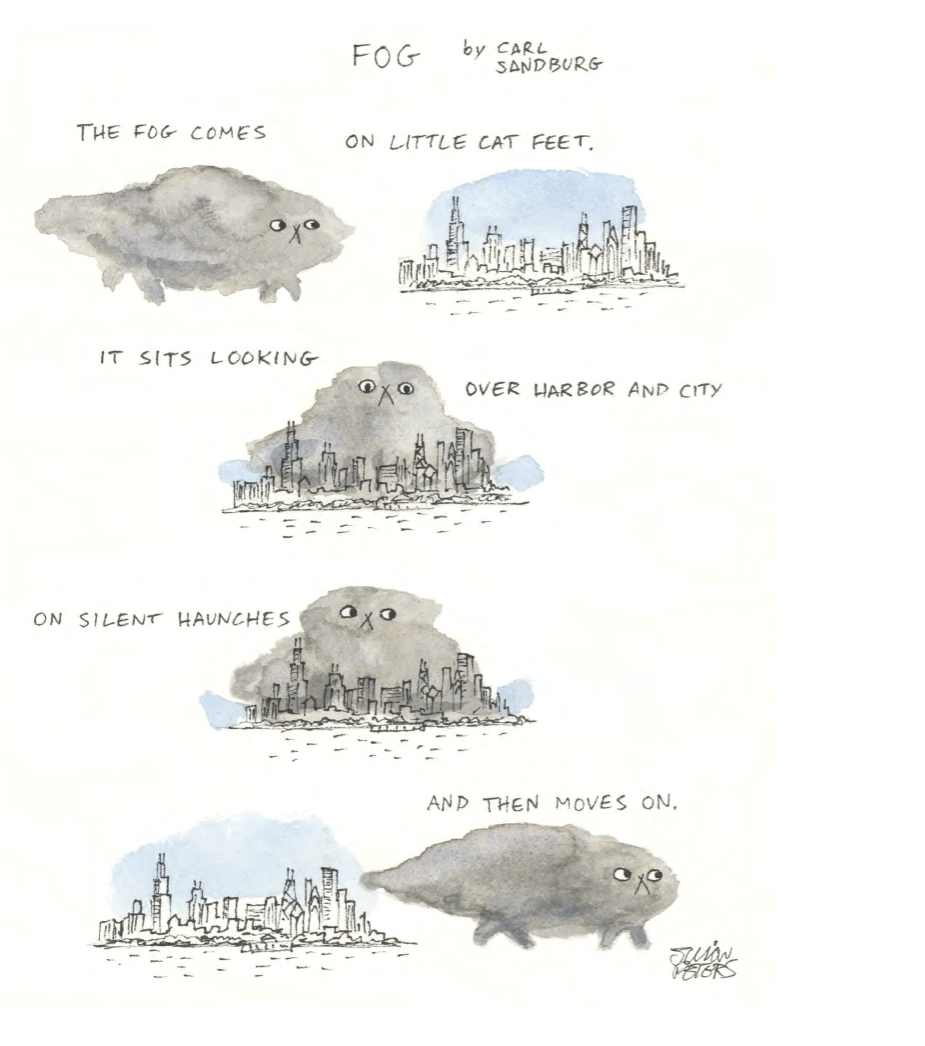
A major strength of the book is Peters’s ability to use comics to illuminate poetic meaning. His illustrations do more than depict the poem—they interpret it.
- Some pages use bold, dramatic ink to emphasize grief or tension.
- Others use soft watercolor tones to evoke calm or wonder.
- Panel layouts often mirror the rhythm of the poem, with breaks that echo line or stanza shifts.
This visual approach helps readers understand abstract or symbolic poems by giving them concrete imagery to hold onto.
Themes
- Human connection to nature: The poems show nature as a source of beauty, comfort, mystery, and sometimes fear.
- Change and impermanence: Seasonal cycles reflect emotional and life cycles.
- Cultural diversity: Poets from different backgrounds show how nature shapes identity and worldview.
- Art as interpretation: The book demonstrates how poetry and visual art can work together to create new meaning.
Why the Book Matters
The anthology is especially valuable for students because it:
- Makes poetry more approachable through visuals
- Encourages close reading by comparing the comic version with the original text
- Supports visual learners
- Shows how art can deepen understanding of literature
- Introduces a wide range of poets, styles, and historical periods
Educators praise the book for sparking discussion and helping students who struggle with traditional poetry analysis.
Personal Response
The book feels both educational and emotionally rich. Peters’s illustrations invite readers to slow down and notice details they might miss in the text alone. The variety of artistic styles keeps the book engaging, and the poems chosen are powerful on their own but become even more vivid when paired with the artwork. It’s a book that can change how readers see poetry—and how they see nature.
 I write about Stuff
Leave a comment