From Genesis to Junia – Preston Sprinkle
Overview of the Book
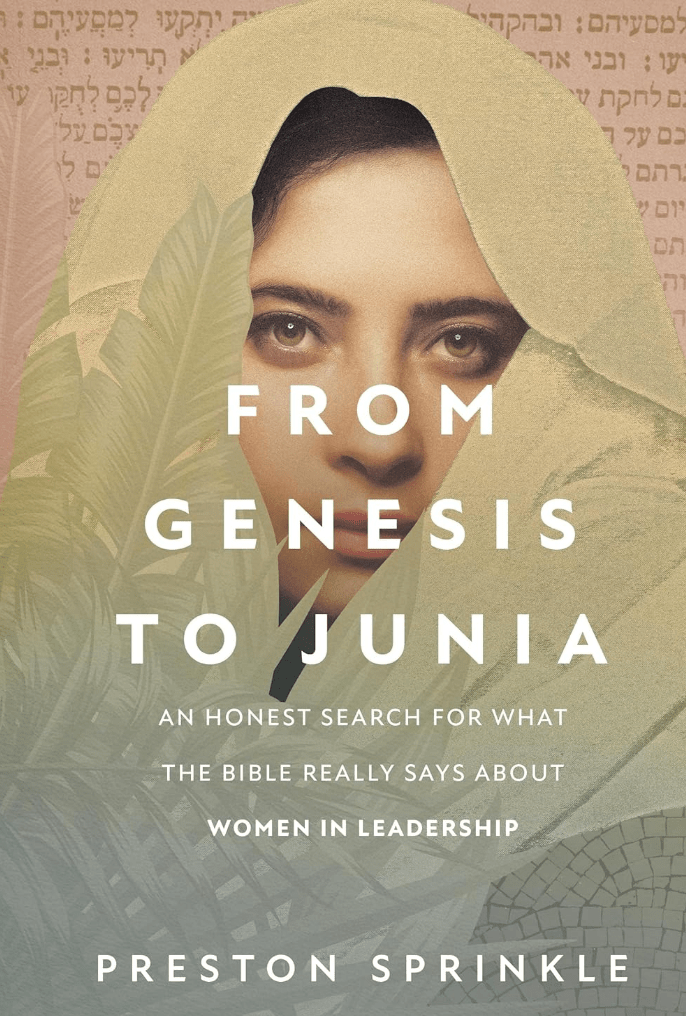
From Genesis to Junia is Preston Sprinkle’s careful, open‑handed exploration of what Scripture actually says about women in church leadership. Rather than beginning with a predetermined conclusion, Sprinkle begins with questions — and invites readers into a genuine search for biblical clarity. Moving from Genesis to Revelation, he examines key passages, weighs historical and cultural context, and interacts with a wide range of scholarship. The result is not a manifesto, but a model of humble, rigorous theological inquiry.
Key Ideas and Arguments
Sprinkle structures the book around the most debated texts and themes:
- Creation and the Fall — What Genesis 1–3 reveals (and does not reveal) about gender, authority, and God’s design.
- Women in the Old Testament — How God calls, commissions, and empowers women in Israel’s story.
- Jesus and Women — The countercultural way Jesus honours, teaches, and commissions women.
- Paul’s Letters — Detailed engagement with 1 Corinthians 11, 1 Corinthians 14, Romans 16, and 1 Timothy 2, including linguistic, cultural, and historical analysis.
- Junia and the Early Church — A fresh look at the women who led, taught, hosted churches, and served as apostles and co‑labourers in the gospel.
Sprinkle’s central conviction is that Scripture must be allowed to speak for itself — even when it challenges our assumptions, traditions, or comfort zones.
Strengths of the Book
- Intellectual honesty — Sprinkle refuses to oversimplify complex passages or force tidy conclusions where Scripture leaves tension.
- Balanced engagement — He critiques both complementarian and egalitarian arguments with fairness and respect.
- Pastoral tone — The writing is gentle, humble, and deeply aware of the real people affected by this conversation.
- Scholarly depth — His training in New Testament studies is evident, but he communicates in a way that is accessible to non‑academics.
- A model for disagreement — The book demonstrates how Christians can wrestle with difficult issues without hostility or fear.
Potential Limitations or Tensions
- Readers who want a definitive, one‑sentence conclusion may find Sprinkle’s open‑ended posture challenging.
- Some may feel he gives too much weight to scholarly debate; others may feel he doesn’t go far enough.
- Because he intentionally avoids aligning with a camp, readers on both sides may wish he pushed harder in their direction.
These tensions, however, are part of the book’s integrity — it is intentionally a journey, not a verdict.
Who This Book Is For
- Church leaders navigating questions of women’s roles
- Bible study groups exploring difficult passages
- Christians who feel caught between complementarian and egalitarian frameworks
- Anyone wanting to model gracious theological disagreement
- Readers who appreciate scholarship delivered with humility and pastoral sensitivity
Pastoral Reflection
Sprinkle’s approach feels like a breath of fresh air in a conversation often marked by defensiveness and division. His willingness to ask honest questions — and to let Scripture unsettle him — is a posture the church desperately needs. Whether or not readers agree with all his conclusions, the book invites us to slow down, listen carefully, and trust that God’s Word is strong enough to withstand our questions. It also honours the women who have faithfully served Christ throughout history, often without recognition or permission.
Memorable Takeaway
This book doesn’t tell you what to think — it teaches you how to think biblically, humbly, and courageously about one of the church’s most important conversations.
 I write about Stuff