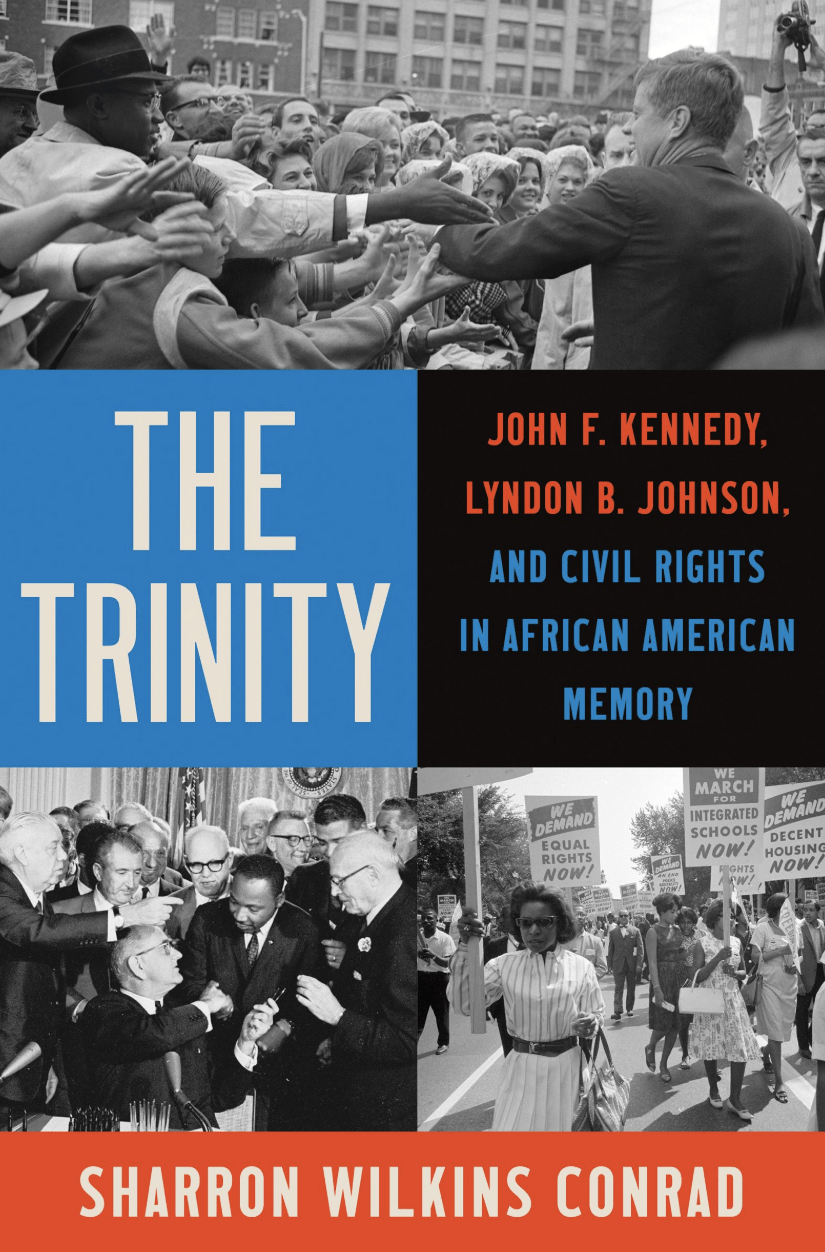
Review: The Trinity: John F. Kennedy, Lyndon B. Johnson, and Civil Rights in African American Memory by Sharron Wilkins Conrad
Sharron Wilkins Conrad’s The Trinity is a compelling and incisive study of how African American communities have remembered the civil rights era—not simply as passive observers of history, but as active creators of meaning. At the centre of her exploration is the striking triptych once found in countless Black households: Jesus Christ, Martin Luther King Jr., and John F. Kennedy. Conrad treats this visual tradition not as quaint nostalgia but as a profound act of cultural storytelling, a way of asserting dignity, hope, and agency in the face of a nation that often refused to see or honour Black experience.
What makes this book so absorbing is Conrad’s insistence that memory is political. She traces how Kennedy, with his charisma, symbolic promise, and tragic death, came to occupy a near‑sacred place in African American imagination—often eclipsing Lyndon B. Johnson, despite Johnson’s undeniable legislative achievements. Conrad does not diminish Johnson’s impact; instead, she shows how emotional resonance, perceived moral alignment, and the hunger for heroic leadership shaped the stories communities chose to tell. Kennedy became a martyr‑figure of possibility, while Johnson, associated with political calculation and the frustrations of the era, never entered the same spiritual register.
Conrad’s archival work is exceptional. She draws on grassroots voices, condolence letters, church newsletters, and community memory to reveal a textured, often overlooked dimension of civil rights history. The inclusion of Martin Luther King Jr.’s searing reflection on Kennedy’s assassination—lamenting a “morally inclement climate” of hatred and violence—underscores how deeply intertwined faith, politics, and grief were in this period.
The book’s greatest strength lies in its clarity: it shows how communities construct historical truth not by following official narratives, but by elevating the figures who speak to their deepest longings and wounds. In doing so, Conrad reframes the civil rights era as a living memory shaped from the ground up, not merely a sequence of presidential decisions.
The Trinity is both scholarly and deeply human. It will resonate with readers interested in civil rights history, political leadership, African American studies, or the power of collective memory. Conrad offers a nuanced, necessary reminder that the stories we tell about our leaders reveal as much about ourselves as they do about the past.
 I write about Stuff