“The members of the council were amazed when they saw the boldness of Peter and John, for they could see that they were ordinary men with no special training in the Scriptures. They also recognized them as men who had been with Jesus.” —Acts 4:13 NLT
Not long after the astonishing events of Pentecost, Peter and John made their way to the temple for the afternoon hour of prayer. At the gate sat a man everyone knew—a paraplegic from birth, carried daily to the same spot to beg for coins from worshippers. His presence was familiar, his need undeniable, and his future seemed fixed. But the Holy Spirit had changed everything for Peter and John, and what they offered him that day was far greater than the silver or gold he hoped for.
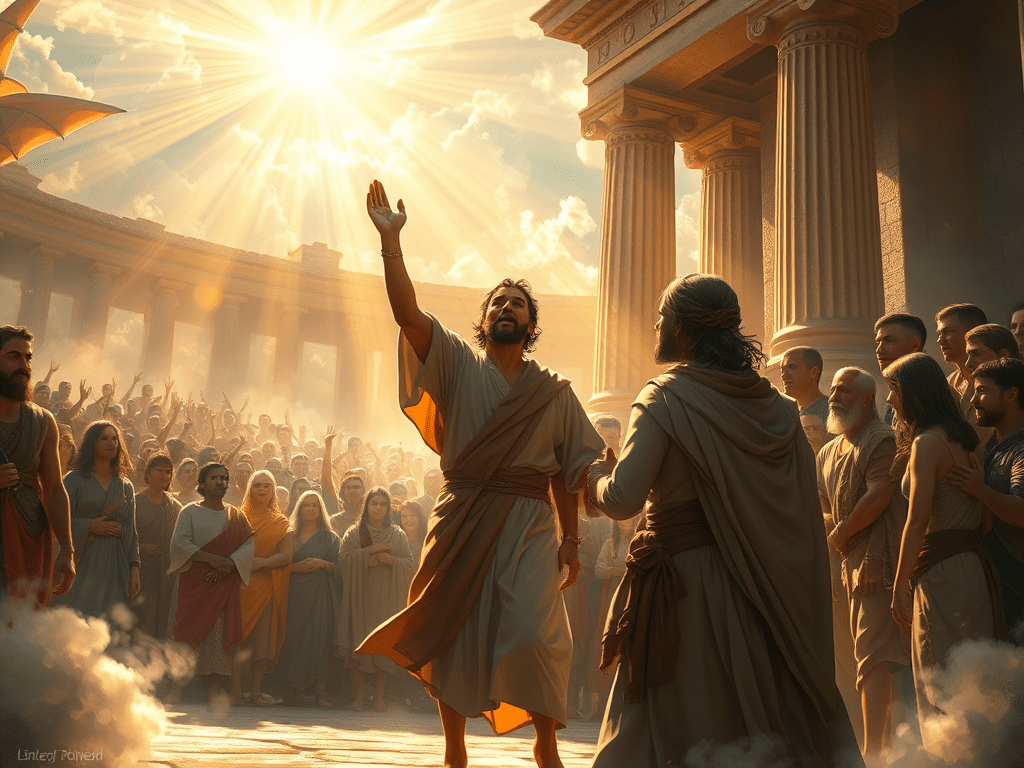
Peter looked at him with Spirit-given confidence and said, “I don’t have any silver or gold for you. But I’ll give you what I have. In the name of Jesus Christ the Nazarene, get up and walk.” In an instant, strength surged into the man’s legs. He stood, then walked, then leapt—overflowing with joy as he followed the disciples straight into the temple, praising God with every step.
The crowd recognized him immediately. The man they had passed countless times was now whole, radiant, transformed. Wonder drew them in, and Peter—once the disciple who trembled at the thought of being associated with Jesus—now stepped forward with fearless clarity. The resurrection had reshaped him. The Spirit had emboldened him. And he seized the moment to proclaim the truth.
He told the crowd plainly that the power behind the miracle was Jesus—the very One they had rejected, the One they had demanded be crucified, the One God had raised from the dead. Peter connected the dots between prophecy and fulfillment, between their longing for a Messiah and the Savior standing in their midst through His Spirit. He urged them to repent, to receive forgiveness, to turn toward the life God was offering. And about two thousand people responded in faith.
But boldness often invites opposition. The religious leaders, unsettled by the growing movement, arrested Peter and John. The next day, the two disciples stood before the same council that had condemned Jesus only weeks earlier. The officials demanded to know by what power the healing had been done. It was a dangerous question—but the Spirit-filled answer was even more dangerous to the status quo.
Peter declared that the man had been healed by the name of Jesus Christ, the One they had crucified and the One God had raised. He proclaimed that salvation is found in no one else. He spoke with a courage that could only come from the presence of the risen Lord.
Peter and John knew the risks. They knew these leaders had the authority to imprison or even execute them. But they also knew the One who had conquered death. So they spoke boldly and entrusted the consequences to God.
The Lord doesn’t promise to spare His people from discomfort or opposition. But He does promise His presence. He strengthens us when we feel small, steadies us when we feel afraid, and rewards faithfulness in ways we cannot yet see. Boldness is not the absence of fear—it is the presence of the Holy Spirit.
Reflection: What might boldness in sharing the Good News look like in your life today—right where you are, with the people God has placed around you?
 I write about Stuff
Leave a comment