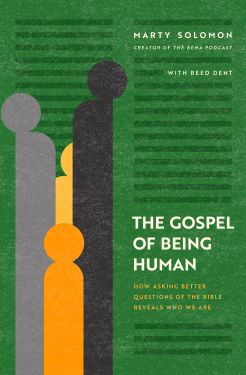
The Gospel of Being Human
How Asking Better Questions of the Bible Reveals Who We Are by Marty Solomon; Reed Dent – a book review
Overview of the Book
The Gospel of Being Human is a provocative, hopeful, and deeply pastoral exploration of what Scripture actually says about human identity. Marty Solomon and Reed Dent challenge the long‑held assumption that humanity is fundamentally broken, sinful, and untrustworthy. Instead, they invite readers to rediscover the biblical truth that being human is not a flaw to overcome but a gift to embrace — a vocation rooted in God’s original declaration that creation, including humanity, is very good. Through ten theological perspectives, the authors reframe the gospel as the restoration of our God‑given humanity rather than an escape from it.
Key Themes and Insights
Solomon and Dent build their argument around a series of reframed theological questions:
- Humanity as vocation — being human is a calling, not a curse.
- Identity as image‑bearers — Scripture begins with goodness, not depravity.
- Curiosity as discipleship — asking better questions leads to deeper faith.
- Sin as distortion, not definition — sin is real, but it is not the truest thing about us.
- The gospel as restoration — God’s work is to reclaim our humanity, not erase it.
- Power, failure, and story — the authors revisit themes like authority, shame, and purpose through a more relational, Jewish‑contextual lens.
- Faith deconstruction and reconstruction — offering a path that is honest, biblical, and hopeful.
The table of contents reveals a journey from identity (“Who Are You?”) to vocation (“No Other Story”) to a renewed understanding of the gospel (“Actually Believing the Actual Gospel”).
Strengths of the Book
- A fresh theological lens — the authors challenge inherited assumptions without dismissing Scripture.
- Jewish contextual insight — Solomon’s background in Jewish studies enriches the biblical narrative.
- Pastoral sensitivity — the tone is gentle, honest, and deeply aware of readers who feel wounded or disillusioned.
- Accessible yet thoughtful — complex ideas are communicated with clarity and warmth.
- Relevance for today — the book speaks directly into conversations about deconstruction, identity, and spiritual formation.
- Imaginative reframing — readers are invited to wonder, question, and rediscover rather than defend or fear.
Potential Limitations or Tensions
- Readers with strong commitments to traditional doctrines of original sin may find the reframing challenging.
- Those seeking a systematic theological argument may prefer more exegetical depth.
- Some may feel the book leans more toward pastoral encouragement than doctrinal precision.
These tensions reflect the book’s purpose: not to settle debates, but to open space for deeper, more life‑giving engagement with Scripture.
Who This Book Is For
- Christians wrestling with inherited beliefs about sin, identity, and worth
- Readers navigating faith deconstruction or reconstruction
- Pastors, small‑group leaders, and spiritual directors
- Anyone longing for a more hopeful, biblically rooted understanding of humanity
- Fans of the BEMA podcast or Jewish‑contextual approaches to Scripture
Pastoral Reflection
This book feels like a gentle exhale for anyone who has ever felt that their humanity was a disappointment to God. Solomon and Dent offer a gospel that is both ancient and refreshingly new — a gospel that begins with goodness, honours our questions, and invites us into partnership with God rather than perpetual shame. Their writing is spacious, curious, and deeply rooted in Scripture. It is a reminder that the God who created us delights in us, calls us, and restores us — not despite our humanity, but through it.
Memorable Takeaway
A hopeful, paradigm‑shifting invitation to see your humanity not as a problem to fix, but as a sacred calling to embrace.
 I write about Stuff
Leave a comment