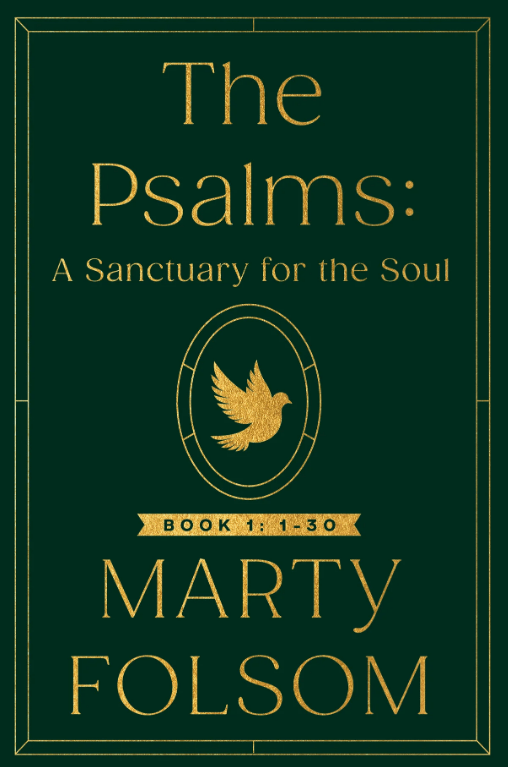
The Psalms: A Sanctuary for the Soul (Book 1: Psalms 1–30) by Marty Folsom
— Book Review
Overview of the Book
The Psalms: A Sanctuary for the Soul is the first volume in Marty Folsom’s five‑part exploration of the Psalter, offering a deeply relational, imaginative, and spiritually attentive journey through Psalms 1–30. Rather than approaching the Psalms as academic artefacts or literary puzzles, Folsom treats them as living prayers — spaces where the human soul meets the heart of God. His goal is not merely to explain the Psalms but to help readers inhabit them, allowing their poetry to shape emotion, imagination, and intimacy with the Triune God.
Key Themes and Insights
Folsom’s approach is grounded in relational theology, and this shapes the entire book:
- The Psalms as dialogue — not monologues to God but conversations with Him, full of honesty, longing, lament, and praise.
- The Psalms as sanctuary — a place where readers can bring their whole selves, including emotions often suppressed in modern spirituality.
- The Psalms as relational formation — shaping how we see God, ourselves, and others.
- The Psalms as imaginative space — Folsom offers interpretive paraphrases that open the text, inviting readers to hear familiar psalms with fresh ears.
- The Psalms as spiritual companionship — guiding readers into deeper communion with Father, Son, and Spirit.
Each psalm is paired with a poetic paraphrase and reflective commentary, helping readers move from understanding to encounter.
Strengths of the Book
- A fresh, relational lens — Folsom’s theological background brings a unique warmth and depth to the Psalms.
- Creative paraphrases — these sit alongside the biblical text, offering new angles without replacing Scripture.
- Accessible spirituality — the book is suitable for both seasoned theologians and everyday believers seeking deeper prayer.
- Imaginative engagement — Folsom encourages readers not just to analyse the Psalms but to pray them, feel them, and live them.
- Rich endorsements — scholars like Walter Brueggemann, Jeremy Begbie, and James Houston affirm the book’s depth and originality.
Potential Limitations or Tensions
- Readers looking for a traditional commentary may find the poetic paraphrases unconventional.
- Those wanting verse‑by‑verse exegesis may prefer a more technical resource.
- The relational‑theology lens is distinctive; some may wish for more engagement with alternative interpretive traditions.
These are less criticisms and more reflections on the book’s chosen purpose: it is a spiritual companion, not a technical commentary.
Who This Book Is For
- Readers seeking a devotional yet theologically rich journey through the Psalms
- Pastors, worship leaders, and spiritual directors
- Individuals longing for deeper emotional honesty in prayer
- Those exploring relational theology or imaginative approaches to Scripture
- Anyone who wants to rediscover the Psalms as living, breathing prayers
Pastoral Reflection
Folsom’s work feels like an invitation to slow down, breathe, and let the Psalms do their ancient work in us. His reflections honour the emotional breadth of the Psalter — joy, fear, anger, longing, trust — and remind us that God welcomes every part of the human experience. The poetic paraphrases are especially moving, offering fresh language that opens the heart rather than closing it with over‑familiarity. This volume is a gift for anyone who wants to pray the Psalms not as distant poetry but as a living sanctuary where God meets us with grace.
Memorable Takeaway
A beautifully crafted guide that helps readers not just study the Psalms, but dwell in them — and in the presence of the God who meets us there.
 I write about Stuff