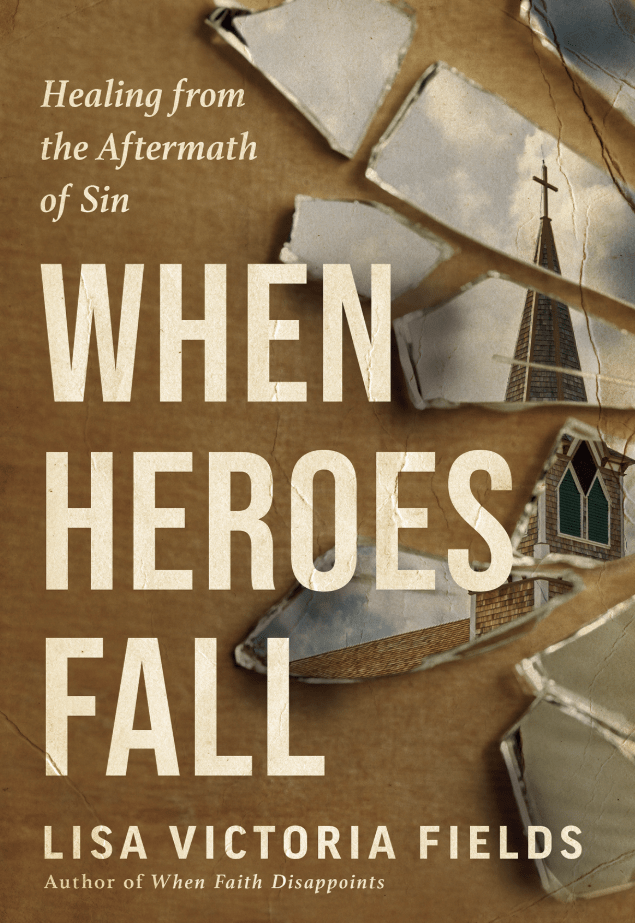
When Heroes Fall immediately caught my attention because of its title. My own research focuses on the phenomenon of Christian leaders “falling from grace,” and the ripple effects this has on the communities they serve. Fields’ book sits squarely within that landscape, offering a deeply personal yet pastorally sensitive exploration of what happens when someone we admire spiritually lets us down.
One of the strengths of the book is Fields’ discretion. She never names the individual whose actions caused her such profound distress; instead, she refers to him simply as “Bruce.” This choice is both pastoral and wise. It prevents the book from becoming an exposé and keeps the focus on healing rather than speculation. Given the sheer number of Christian leaders across denominations and ministries who have experienced public moral failure, it would be unhelpful — and unfair — to guess who “Bruce” might be. Fields’ restraint models the very grace and integrity she encourages her readers to pursue.
A phrase that stood out to me, and perhaps the most important line in the entire book, is the reminder that God cares for the victims of sin. This is a truth often overshadowed when scandals break. Institutions rush to protect reputations, supporters scramble to defend their heroes, and the wounded are left to navigate their pain alone. Fields refuses to let that happen. She centres the experience of the victim — their confusion, grief, anger, and spiritual disorientation — and she does so with remarkable tenderness.
Throughout the book, Fields draws on biblical narratives to illustrate different kinds of moral collapse. Unsurprisingly, David features prominently — a figure who seems to be enjoying renewed attention across social media, sermons, and now in Fields’ reflections. David’s story is a reminder that giftedness does not equal godliness, and that charisma can never substitute for character.
This theme resonated with something I recently read elsewhere: an author recounting how, as a child, he lied to his sibling and later joked, “It’s okay — I’m a pastor, so it was a holy lie.” He meant it humorously, of course, but the sentiment exposes a troubling pattern. Too often Christian leaders excuse or minimise their own wrongdoing because they believe their calling places them above ordinary moral scrutiny. “It isn’t a lie — it’s a holy lie because I’m a pastor.” But the truth is simpler: when he lied, he was a child, not a pastor. And perhaps, if dishonesty came so easily, he should have examined his calling more carefully. Fields’ book challenges precisely this kind of self‑deception and the culture that enables it.
Returning to When Heroes Fall, the book is beautifully written — eloquent, honest, and deeply human. It offers a window into Fields’ own journey of disappointment, grief, and ultimately healing. Her vulnerability gives the book its power. It is not a theoretical treatise but a lived testimony.
Lisa Victoria Fields is well known as the CEO and founder of the Jude 3 Project, and as a Christian apologist, speaker, author, and producer. She has shaped conversations across theology, media, and culture, and her experience engaging with complex issues of faith gives this book both credibility and depth.
The book is structured into nine chapters, each addressing a different stage of processing the fall of a spiritual hero:
- The Chosen Hero – how we elevate leaders and invest them with spiritual significance.
- Breaking Free from Hero Worship – recognising unhealthy attachments and misplaced trust.
- Dismantling the Pedestal with Truth – confronting reality rather than clinging to illusions.
- Embracing Grief – acknowledging the emotional and spiritual pain caused by betrayal.
- Releasing the Debt – exploring forgiveness without minimising harm.
- Loving the Victims and the Villain – a challenging call to compassion rooted in the gospel.
- Finding and Living the Lessons – discerning what God might teach us through the experience.
- The Only True Hero – a Christ‑centred reorientation, reminding us that Jesus alone is worthy of ultimate trust.
- It’s All Working for Your Good – a hopeful conclusion grounded in God’s redemptive purposes.
Taken together, these chapters form a pastoral roadmap for anyone navigating the emotional and spiritual aftermath of a leader’s moral failure. Fields neither rushes the reader toward forgiveness nor encourages bitterness; instead, she offers space, honesty, and theological grounding.
In summary, When Heroes Fall is a timely and necessary book. It speaks to a widespread and painful reality within the church today, and it does so with grace, clarity, and courage. For anyone who has been wounded by the fall of a spiritual leader — or who walks alongside those who have — this book is well worth reading.
 I write about Stuff