“Others said, ‘He is the Messiah.’ Still others said, ‘But he can’t be! Will the Messiah come from Galilee?’” —John 7:41 (NLT)
John 7 — When We Miss Jesus Because We Think We Already Know Him
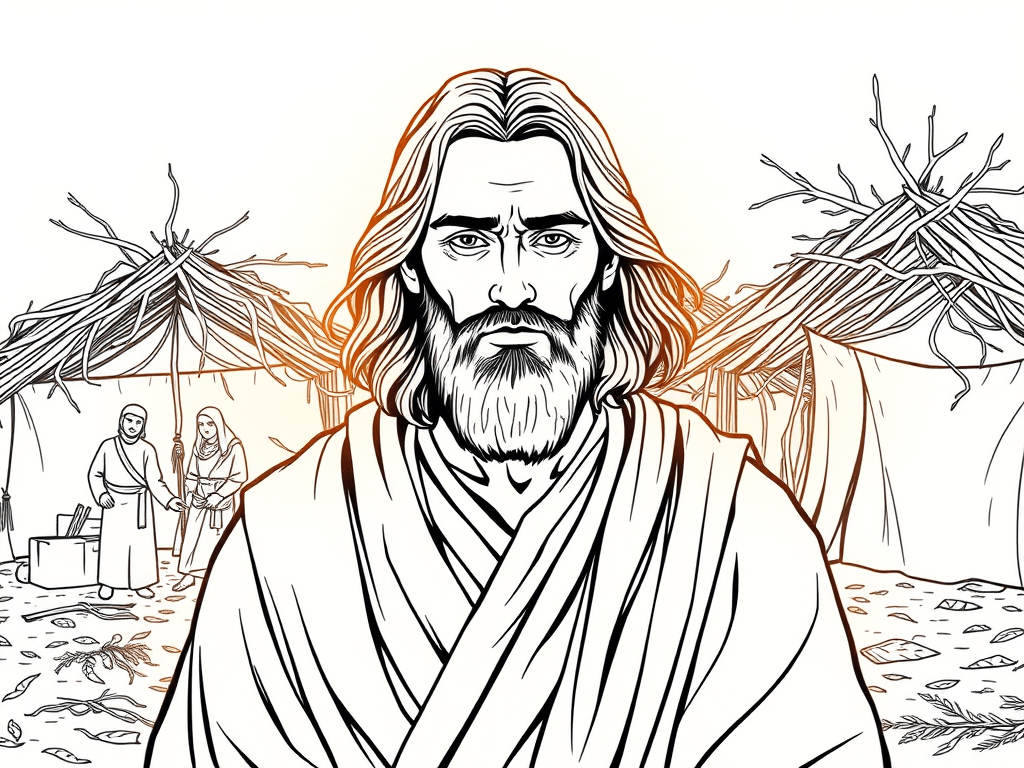
The Jewish Festival of Shelters—also called the Feast of Tabernacles—was one of the most joyful celebrations in the Jewish calendar. For an entire week, families travelled to Jerusalem and lived in temporary shelters made of branches and leaves. These makeshift dwellings were a physical reminder of God’s faithfulness during Israel’s wilderness journey, a way of stepping back into the story and remembering the God who guided, protected, and provided.
Jerusalem would have been buzzing with life—pilgrims everywhere, songs rising from the temple courts, the smell of food cooking outdoors, children running between the shelters. It was a time of thanksgiving, community, and worship.
Jesus’ brothers urged Him to go publicly, to make a grand entrance, to show off His miracles in front of the religious elite. They thought He was wasting His potential by staying in Galilee, a region the Jerusalem leaders dismissed as backward and unimpressive. If Jesus wanted to be taken seriously, they reasoned, He needed to perform on the big stage.
But His brothers didn’t believe in Him—not yet. They saw His miracles, but they didn’t see His identity. Perhaps it was sibling rivalry. Perhaps it was the difficulty of believing that the boy you grew up with was the long‑awaited Messiah. Whatever the reason, their unbelief meant their advice was shaped by human ambition, not divine purpose.
Jesus refused to be pushed into their agenda. He wasn’t avoiding Judea out of fear—He was following the Father’s timing. The cross was coming, but not yet. So He travelled to the festival quietly, without fanfare, without the kind of entrance that would stir up unnecessary attention.
But once He arrived, He didn’t hide. He went straight to the temple and began to teach. And His teaching astonished people. He spoke with authority, clarity, and depth—like someone who had spent years under the finest rabbis. Yet He had no formal training. The religious leaders were baffled. They were more concerned with His credentials than His content. They wanted to know where He had learned, not what He was saying.
Jesus cut through their confusion with a simple explanation: “My message is not my own; it comes from God who sent me.” Rejecting His teaching meant rejecting the One who sent Him.
Then Jesus exposed their hypocrisy. They prided themselves on keeping the law, yet they were plotting murder. They condemned Him for healing on the Sabbath, yet they performed circumcisions on the Sabbath without hesitation. Their devotion to rules blinded them to the heart of God.
The crowd was divided. Some wondered why the leaders didn’t arrest Him if they truly believed He was dangerous. Others questioned His origins. They knew His family. They knew His hometown. They knew His trade. They had watched Him grow up. And because they thought they knew Him, they dismissed Him.
Familiarity can make us blind. They expected a Messiah who was mysterious, dramatic, larger‑than‑life. Someone who fit their preconceived ideas. Someone who ticked all the boxes they had created. Jesus didn’t match their expectations, so they rejected Him—even though the evidence of His identity was right in front of them.
This is the tragedy of John 7: They missed the Messiah because they thought they already knew who the Messiah should be.
And this is still a danger for us today. We can create our own version of Jesus—one who fits our preferences, our politics, our comfort zones. One who never challenges us, never confronts us, never surprises us. But that Jesus is not the Jesus of Scripture.
If we want to know who Jesus truly is—His heart, His mission, His desires for us—we must go straight to the source: God’s Word. Not our assumptions. Not cultural opinions. Not second‑hand ideas. Scripture reveals the real Jesus, the One who refuses to be shaped by our expectations and instead invites us to be shaped by His truth.
 I write about Stuff