“Then Jesus told her, ‘I AM the Messiah!’” —John 4:26
John 4 — When Jesus Steps Into the Places We Avoid
As Jesus’ ministry grew, so did the crowds. People weren’t just curious—they were hungry. Hungry for hope, hungry for healing, hungry for a word that cut through the noise of their lives. And as they listened to Jesus, many asked to be baptized. Soon His disciples were baptizing more people than even John the Baptist. That kind of momentum didn’t go unnoticed. The religious leaders felt their influence slipping, and their suspicion of Jesus intensified.
Rather than staying in Judea and allowing Himself to be boxed in by scrutiny, Jesus chose to return to Galilee. But it’s the route He took that reveals something profound about His heart.
The most direct path from Jerusalem to Galilee ran straight through Samaria. But most Jewish travellers avoided that route entirely. They would willingly add days to their journey just to avoid setting foot on Samaritan soil. That’s how deep the hostility ran. Samaritans were viewed as ethnically impure and religiously compromised—people whose ancestry and worship practices made them objects of contempt. Centuries of conflict had hardened attitudes on both sides.
But Jesus walked straight into Samaria.
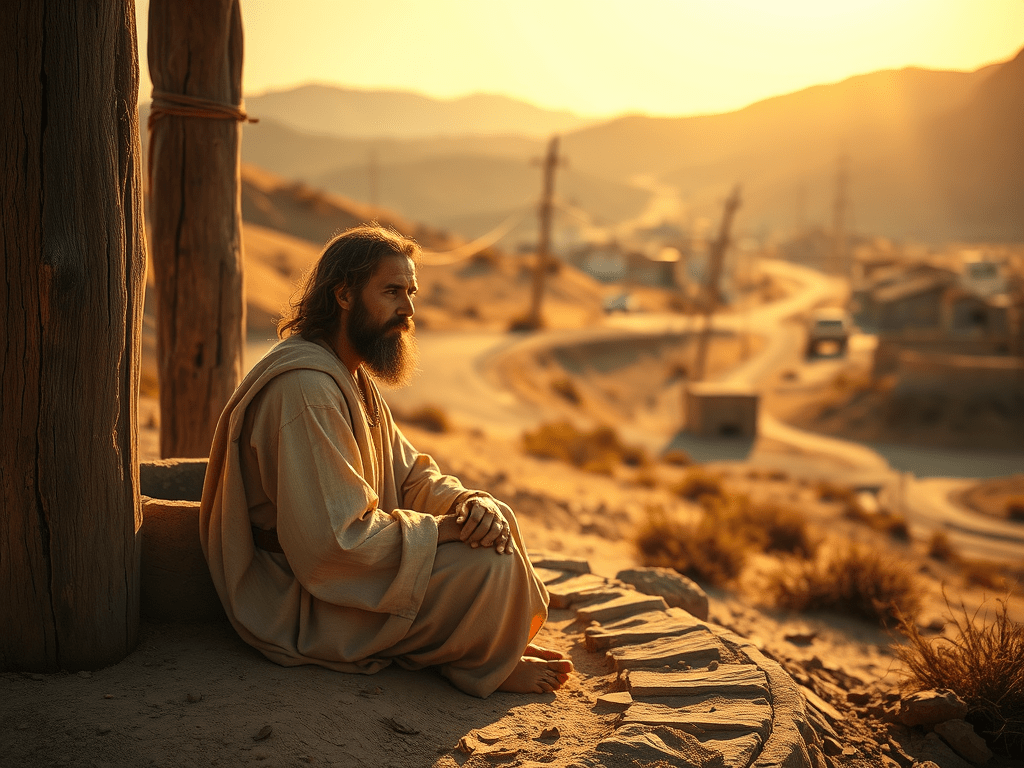
He stopped at a well near Sychar, tired from the journey. While His disciples went into town to buy food, Jesus sat alone in the heat of the day. And then she arrived—a Samaritan woman, coming to draw water at noon, the hottest and most isolating hour. Her timing tells a story. Women usually came early in the morning, together. But she came alone. Her past—five marriages, and now living with a man who wasn’t her husband—had pushed her to the margins of her own community.
Jesus asked her for a drink.
It sounds simple, but it shattered every social rule of the day. • Jews didn’t speak to Samaritans. • Men didn’t initiate private conversations with women. • And respectable people didn’t engage with someone whose reputation was so damaged.
But Jesus wasn’t governed by those boundaries. He wasn’t interested in maintaining the divisions people had built. He was interested in her—her story, her thirst, her longing for something more. And as they talked, she revealed that she, like her people, was waiting for the Messiah.
Then Jesus did something extraordinary. He told her plainly, “I am the Messiah.” To a woman. To a Samaritan. To someone others avoided. Jesus entrusted one of the clearest self-revelations in the entire Gospel to someone the world had written off.
This is the heart of the passage. Our culture trains us to see difference first—to divide ourselves into categories and tribes. Conservative vs. liberal. Men vs. women. Young vs. old. Christian vs. non-Christian. We learn to protect our boundaries, defend our positions, and stay within the comfort of our own circles.
But Jesus moves differently. He steps across the lines we draw. He sees the shared humanity beneath the labels. He recognises the universal longings we all carry: • the need for compassion • the desire to be understood • the ache for peace and purpose • the longing to be known and loved • the hope that our lives matter
Jesus builds bridges where we build walls.
The Samaritan woman became a bridge too. She ran back to her town—this woman who had avoided people—and told everyone about her encounter with Jesus. And they believed. Her story opened the door for an entire community to meet the Messiah.
Later, when Jesus arrived in Galilee, the people welcomed Him eagerly. They had seen His works in Jerusalem and were ready for more. In Cana—the place of His first miracle—a government official approached Him in desperation. His son was dying. He begged Jesus to come.
Jesus’ response reveals something important: “Will you never believe in me unless you see miraculous signs and wonders?” He knew how easily people could become fixated on the spectacular and miss the deeper truth. Miracles were never meant to be the centre of His ministry—they were signposts pointing to who He is.
The official, however, didn’t argue. He simply believed Jesus’ word. And that trust became the turning point. His son was healed—not because the man saw a miracle, but because he trusted the One who spoke.
Not every prayer ends with physical healing. Not every story resolves the way we long for. But everyone who takes Jesus at His word receives something far deeper: grace for the moment, forgiveness for the past, strength for the journey, wisdom for decisions, endurance for trials, and comfort in sorrow.
Jesus still crosses barriers. And He still invites us to do the same.
 I write about Stuff