Scripture: Luke 17:11–19
Introduction: The Road Between
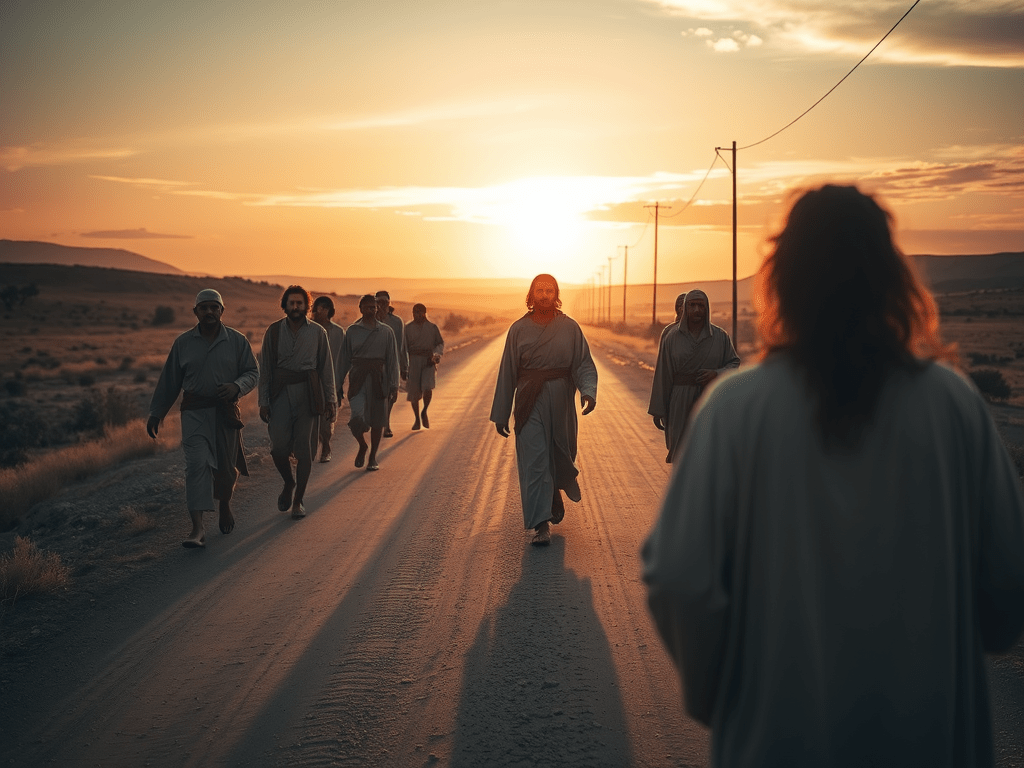
Jesus is on his way to Jerusalem, walking the borderlands between Samaria and Galilee. It’s a place of in-between—geographically, socially, spiritually. And it’s there, in the margins, that ten men with leprosy cry out to him.
They don’t come close. They can’t. They’re unclean, excluded, untouchable. But they call out: “Jesus, Master, have mercy on us!” And Jesus sees them.
This story begins not with healing, but with seeing.
Many of us live in that borderland too. Between diagnosis and recovery. Between grief and peace. Between what was and what might be. Between feeling forgotten and daring to hope. And it’s there—on the edge—that Jesus meets us.
This is a story for those who feel stuck in the in-between. For those who have prayed for healing and waited. For those who carry invisible wounds. For those who wonder if they’re still seen.
Let’s walk gently through this story and listen for the grace that meets us in our own borderlands.
Jesus Sees Us in Our Pain
The ten men stood at a distance. They didn’t dare approach. They didn’t ask for healing directly. They simply asked for mercy.
And Jesus saw them.
He didn’t flinch. He didn’t turn away. He didn’t ask them to prove their faith or clean themselves up first. He saw them—fully, compassionately, without shame.
In a world that often overlooks suffering, Jesus notices. In a culture that avoids pain, Jesus moves toward it. In a faith that sometimes rushes to fix things, Jesus begins by seeing.
This matters deeply. Because being seen is the first step toward being healed. Not just physically, but emotionally, spiritually. To be seen is to be known. To be dignified. To be reminded that you matter.
For those who live with long-term illness, trauma, or grief, invisibility can feel like a second wound. People stop asking. Stop noticing. Stop waiting with you. But Jesus doesn’t.
When he saw them, he said, ‘Go and show yourselves to the priests.’ Before the healing, before the gratitude, Jesus saw them.
What if being seen by Jesus is the beginning of healing—even before anything changes?
Question to Ponder:
When have you felt invisible in your suffering? What does it mean to be truly seen by God?
Healing Can Be a Journey
Jesus doesn’t touch them or speak a word of healing. He simply says, “Go and show yourselves to the priests.” That’s what people did when they were healed—present themselves for inspection, to be declared clean.
But they weren’t healed yet.
Still, they went. And as they walked, they were cleansed.
Healing didn’t happen in a moment. It happened in motion. As they obeyed, as they trusted, as they walked—healing unfolded.
This is so important. Because many of us are walking that road. We haven’t arrived. We’re not “better.” But we’re moving. We’re trusting. We’re still showing up.
Healing is not always instant. It’s often slow, layered, mysterious. It may come through medicine, therapy, prayer, rest, community—or a mix of all these. It may not look like what we hoped. But it’s happening.
And sometimes, the journey itself is part of the healing. The courage to keep walking. The faith to keep asking. The grace to keep breathing.
And as they went, they were cleansed. Not before. Not immediately. But as they went.
What if your journey, with all its ups and downs, is part of the healing—not a detour from it?
Question to Ponder:
Where are you on your journey? Can you trust that healing might be happening even now?
Wholeness Is More Than Cure
One of the ten men, when he saw that he was healed, turned back. He praised God in a loud voice, threw himself at Jesus’ feet, and thanked him.
And he was a Samaritan.
The outsider. The one least expected to return. The one doubly excluded—by illness and ethnicity. But he came back. Not just to say thank you, but to connect. To worship. To receive more.
Jesus says to him, “Rise and go; your faith has made you well.” The word here is not just “healed”—it’s “saved,” “made whole,” “restored.”
All ten were healed. But only one was made whole.
Wholeness is deeper than cure. It’s not just about the body—it’s about the soul. It’s about relationship, gratitude, belonging, peace.
For those who live with chronic illness or trauma, this is good news. Because wholeness is possible even when cure is not. You can be whole even if your body still aches. You can be whole even if your story still holds sorrow.
Jesus offers more than physical healing. He offers presence. Restoration. Salvation. Wholeness.
Rise and go; your faith has made you well. Not just healed. Made whole.
What if gratitude is not just a response to healing, but a doorway into deeper wholeness?
Question to Ponder:
What might wholeness look like for you today—even if your body still aches?
Conclusion: Rise and Go
This story ends with a blessing: “Rise and go; your faith has made you well.”
It’s not just about walking away healed. It’s about walking into life—restored, seen, loved.
For those who live with pain, trauma, or illness, this story is not a demand to be grateful. It’s an invitation to be met by grace. To be seen. To be healed in ways that may surprise us. To be made whole.
Jesus meets us in the borderlands. He sees us when others pass by. He walks with us on the journey. He welcomes us into wholeness.
You are not forgotten. You are not unworthy. You are not alone.
Jesus sees you. And in his presence, healing begins.
 I write about Stuff